Part 2: Garden Design for My First Perennial Garden (Using What I Learned as a Designer + AI)
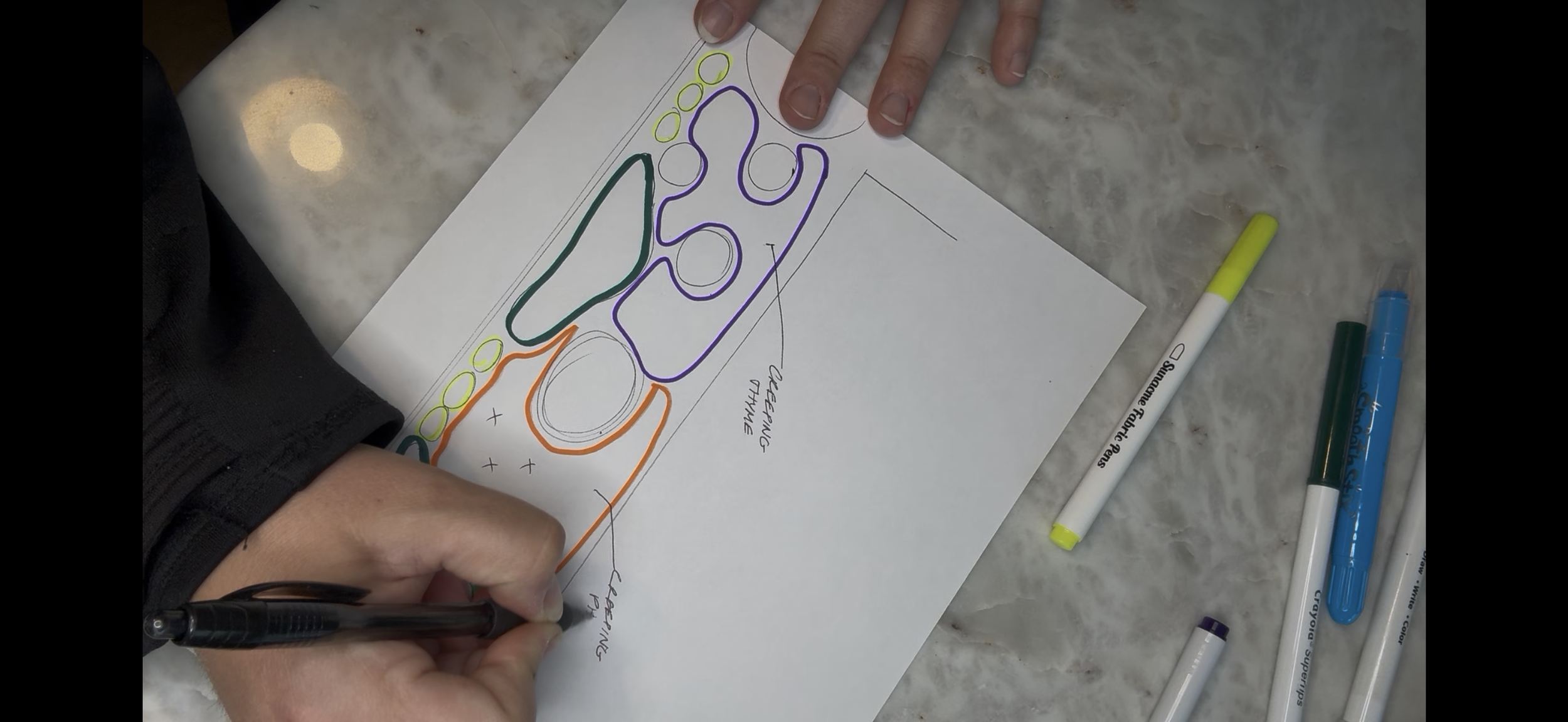
Sketching the garden design
I’m planting my first Michigan perennial garden and I am stoked about it. Believe it or not, I spent my university years in landscape architecture and urban planning. Then began my professional career as a designer at a planning and architecture firm where I specialized in land planning, campus development, and international resort design. Today I’m sharing Part 2 of the adventure, designing the actual layout for my perennial garden at our historic Michigan home.
Which perennials should go where?
If you recall, I started my plants from seed and am planting them onto a property full of 100+ year old black walnut trees. For this reason, the spaces where I’m planting these perennials are contained and strategically shaping the experiences where we approach our home, enter or exit, or host guests. We also needed to consider sun exposure, access to water, and proximity to neighboring plants.
Use AI to Develop Your Planting Plan
I plugged all of the basic plant species names into a chart with their sun and water needs so that I had a clear understanding of what could be partnered with each other, and what needed its own space or individual care plan. You can do this too, by prompting your favorite AI tool with this command:
Act as a 20+ year [name the state you’re planting in] gardening expert and create a chart that shows specific planting details and needs for each of the following species of plants, including sun orientation and exposure, watering, soil and drainage, spacing, proximity to other plants and preferred neighboring plants, etc.: [list the plants you’d like to use]
Create Your Reference Plant Guide With AI
Then I asked my AI assistant to create a visual or graphic reference guide with the information in my chart. You can right click to download mine as an example, and plug in this prompt to create your own:
Put this plant chart into one visual or graphic that can be used as a visual guide or reference.
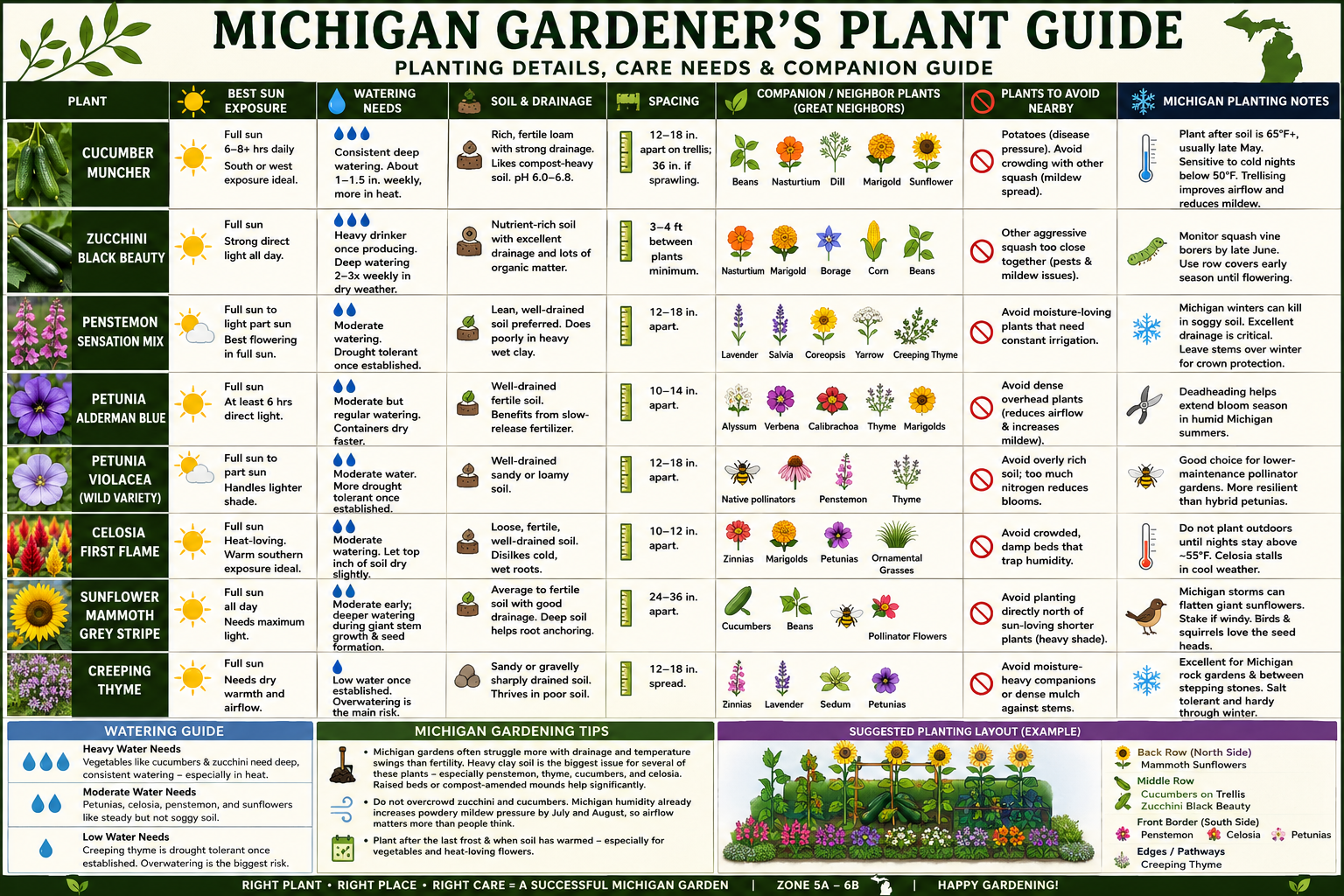
My AI buddy helped me create this planting reference guide.
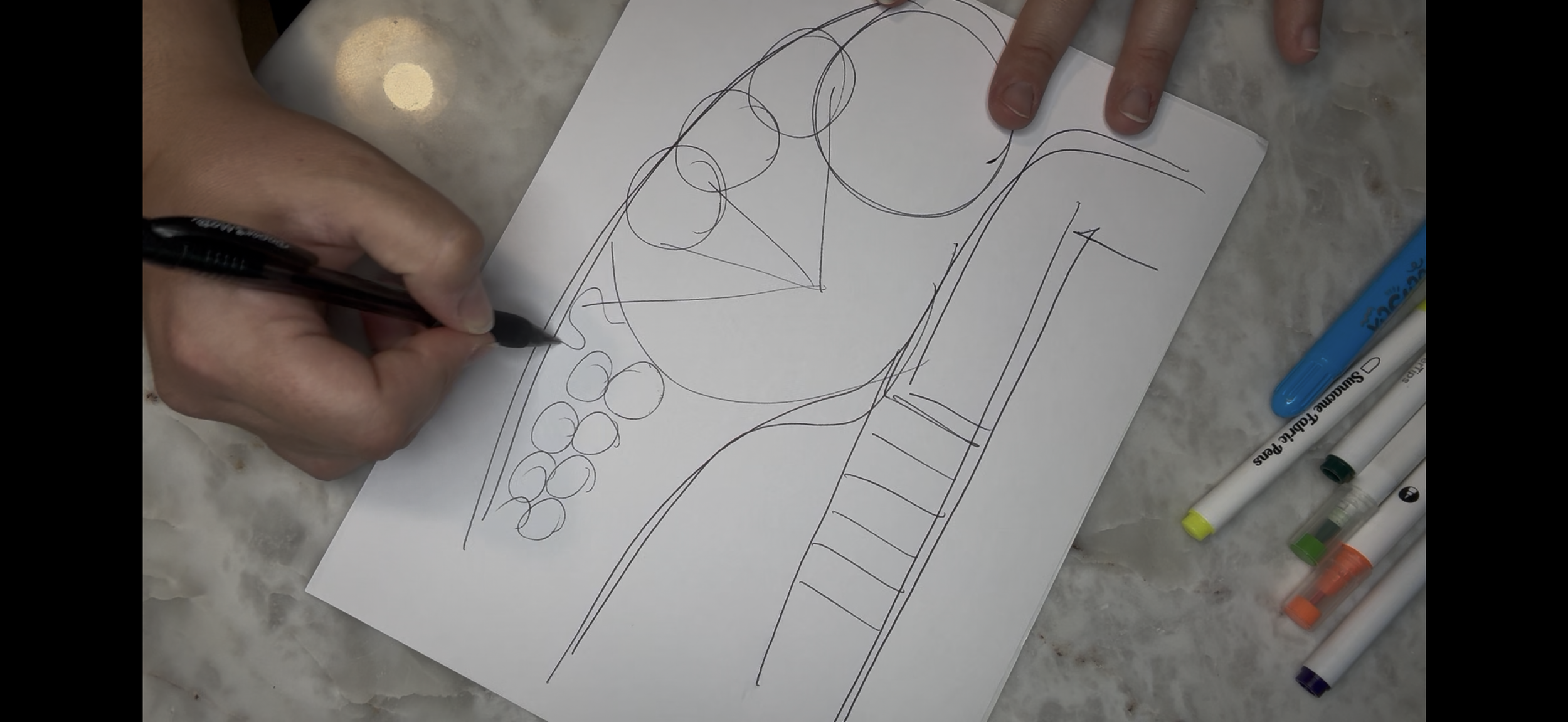
Garden design for new perennial seedlings to join existing garden bed
Group Like Plants for Their Needs
From there, group the plants that tolerate similar extreme conditions best, together. Identify those best locations for the condition on your property and reverse engineer where the more forgiving or resilient plants can fit into the mix.
At the same time, consider plants that are designed to serve specific functions, like ground cover or shade dwelling (where other things don’t grow well). Place those in the design early on, so that you can work around them.
Other primary considerations are height, color, and general size and function. For example, if your space is functioning as a walkway and your plants need to border that walkway, they need to grow tight or be easily pruned in order to not obstruct your thoroughfare.
How do I get inspired? Or start into creatively designing the layout?
I use Pinterest to be inspired by groupings and combinations of plants and do some research as to how the species I’ve found and grown will look paired next to other combinations of plantings. From there I often doodle out arrangements with simple colored pencils or markers to visualize what my version of these arrangements could be. A more sophisticated approach is also to take photos of your actual space and bring those into Canva or another photo editing tool and add similar colors or shapes to mimic what your future plantings might look like.
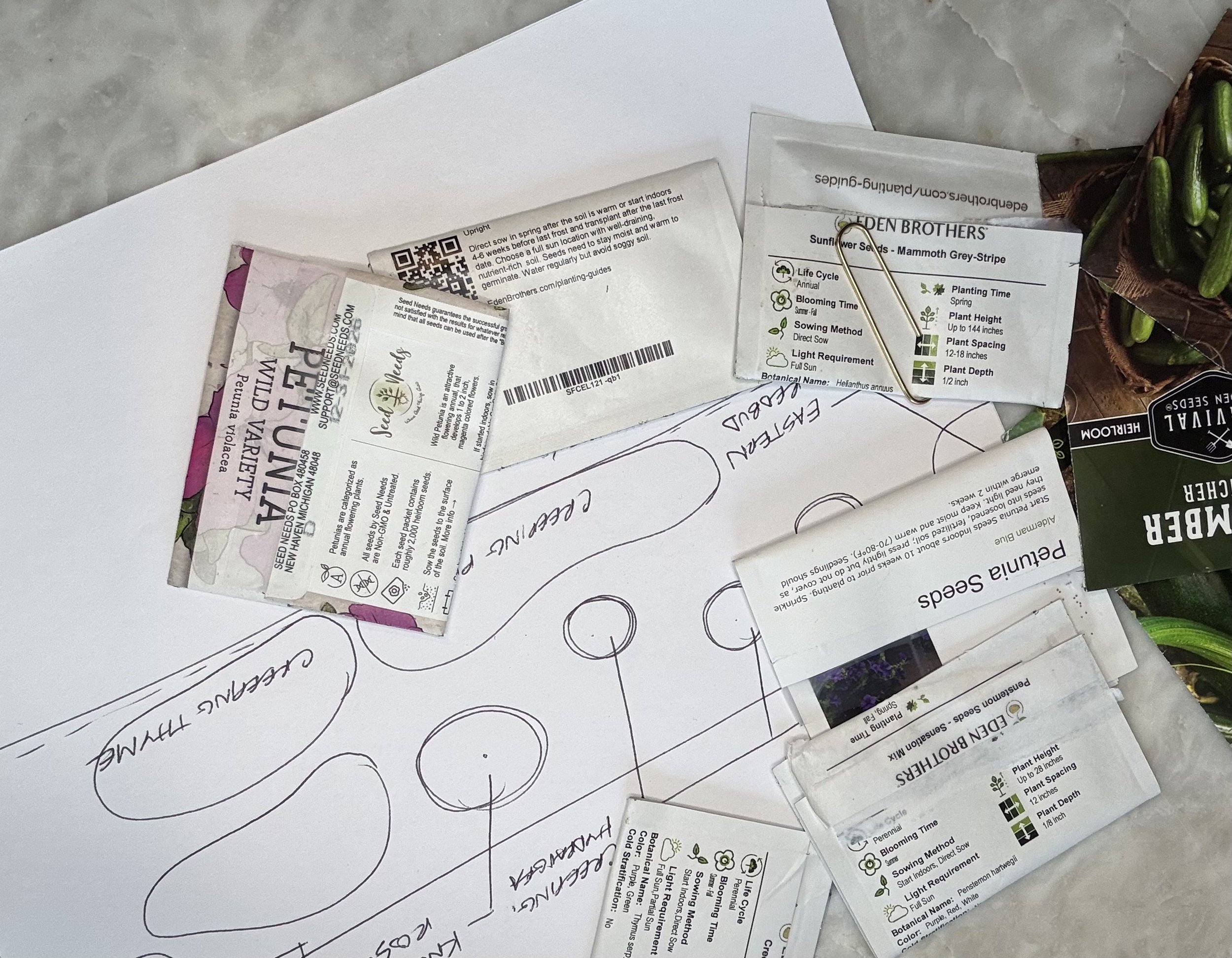
One of my desk-organizers-turned-seed-planter. I love using whatever I have to start the seed growing process.
Starting Installation
It was hard to wait for the last freeze this year! I had overgrown and leggy seedlings I desperately needed to get into the ground. But the most important thing to do in order for your seedlings to be successful is to plant them according to their package instructions and plant needs. Once in the ground, setting timers to ensure they’re watered regularly, mulching if needed, all of these specific steps will help nurture them in their new home, outside. These are the seeds I planted and each package or product detail typically provides guidance for this level of installation and plant maintenance.
Petunia | Petunia Wild Variety | Sunflower | Sunflower - Mammoth Grey Stripe | Creeping Thyme | Penstemon | Celosia
Protect your gardens and seedlings
We have so many deer and small critters that eat virtually everything I’ve ever planted. I almost didn’t attempt this year’s perennial garden because they’ve eaten everything I planted in the past! So this year I placed decoy creatures on top of my newly installed planting beds to protect those seedlings. I didn’t have those premium, realistic looking fox decoys, no. But I did find a couple of toddler dinosaurs that seem to be working just as well…
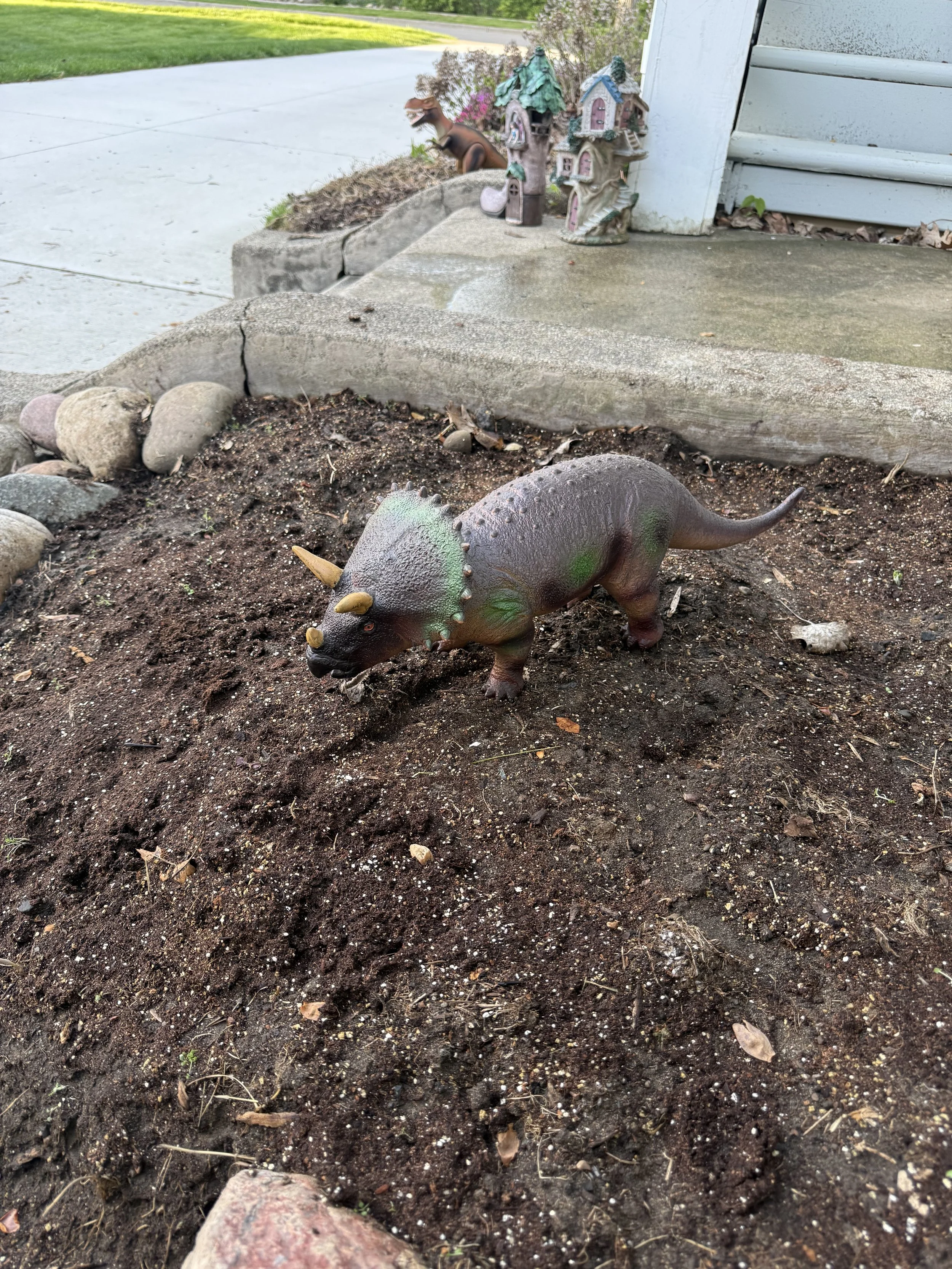
Triceratops guarding the penstemon seedlings
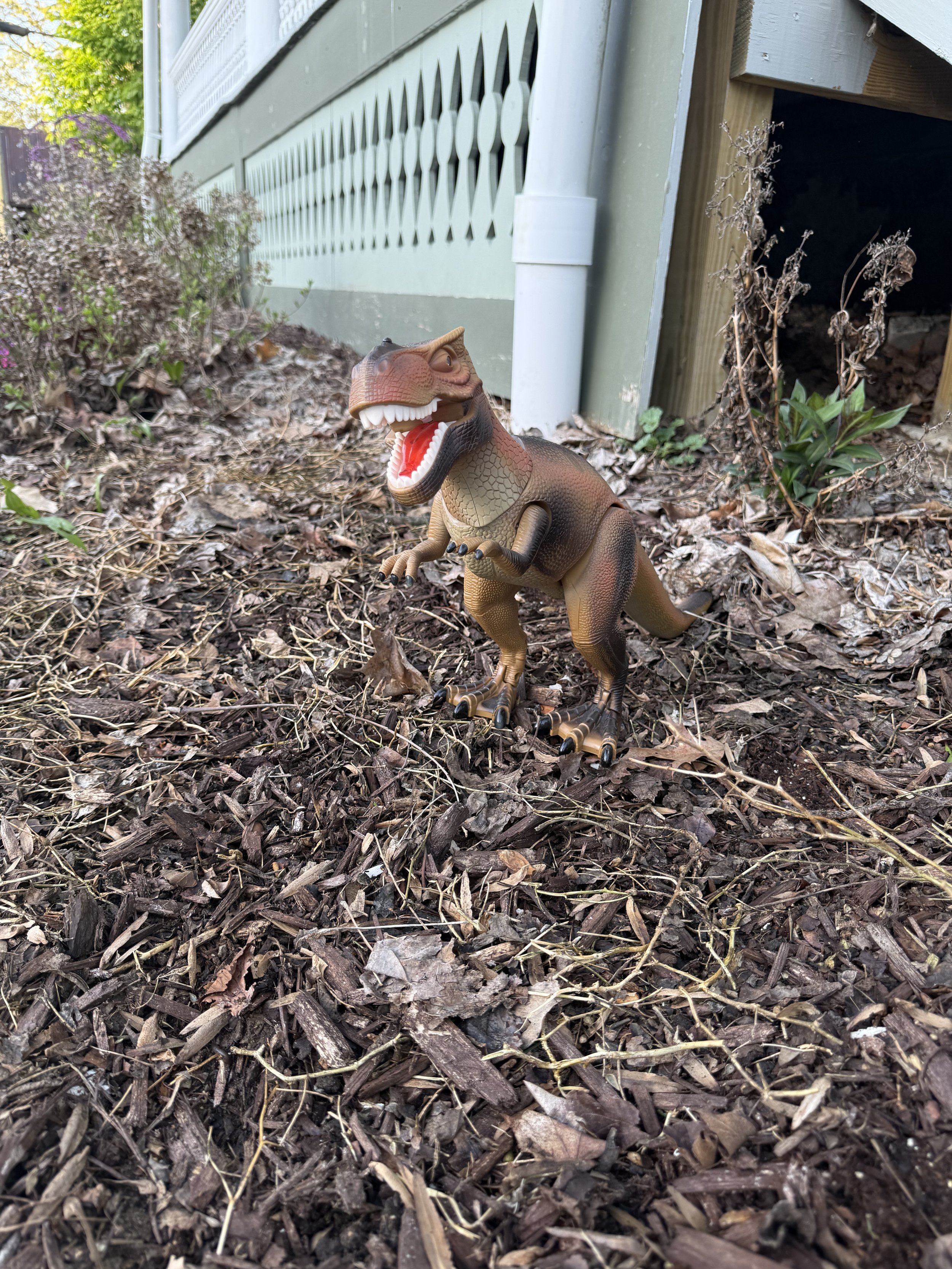
T-Rex keeping watch over the creeping thyme and phlox garden bed
Stay tuned for growth!
Hopefully by my next update I’ll have progress to share. If you liked the AI prompt or planting guide resource, let me know by sending me an email. I want to continue creating more of what you find most valuable.